Related Articles
- Navigating Ethical Travel: The Role of Arts and Crafts in Supporting Local Economies and Cultures
- Rediscovering Ancestral Routes: How Ancient Trails Offer Insights into Sustainable Travel Practices
- The Ethical Dilemma of Luxury Travel: Splurging or Supporting Sustainable Development?
- Navigating Ethical Dilemmas: The Quest for Authenticity in Local Food Experiences While Traveling
- Beyond the Facade: Exploring the Subsurface Infrastructure of Iconic Historical Structures
- Curiosities Unearthed: The Surprising Connections Between Historic Sites and Modern Art Movements
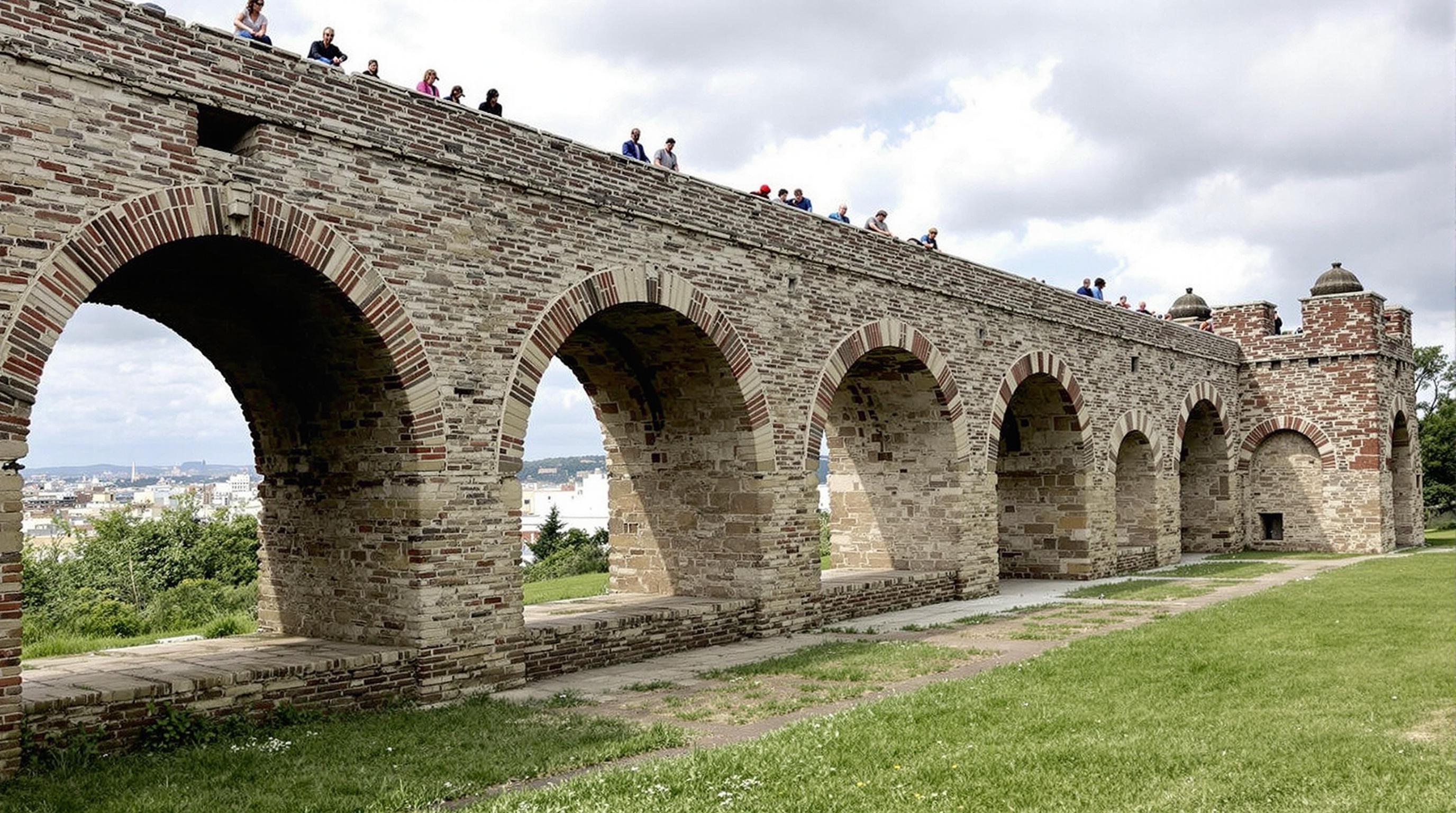
7 Offbeat Historic Landmarks That Challenge Our Understanding of Time and Space Beyond Conventional Narratives
7 Offbeat Historic Landmarks That Challenge Our Understanding of Time and Space Beyond Conventional Narratives
7 Offbeat Historic Landmarks That Challenge Our Understanding of Time and Space Beyond Conventional Narratives
The concept of time and space has always been central to historical narratives. However, certain landmarks challenge conventional perceptions, inviting visitors to consider deeper and more complex interpretations of our reality. Here, we explore seven unique locations that defy the traditional bounds of history and perception, pushing the boundaries of what we know. Each landmark offers an intriguing glimpse into the intersections of culture, science, and the human experience.
These sites often blend historical significance with an unorthodox take on time and space. By examining them, we not only uncover facts but also engage with the narrative's layers—reality versus perception. Some of these sites challenge our assumptions about progress, while others evoke questions of relativity, existence, and the very fabric of what we consider being “real.”
From ancient structures to modern marvels, the diversity of these landmarks reflects how various societies have grasped their understanding of existence. They serve as cultural touchstones, prompting reflection and conversation about our place in the vast continuum of history. So, without further ado, let's embark on a journey through these fascinating, offbeat historic landmarks.
1. The Great Serpent Mound, Ohio
This ancient effigy mound, shaped like a serpent with an undulating form, stretches over 1,300 feet. Traditionally attributed to the Adena culture, its true purpose and meaning remain a mystery. What’s most intriguing is its alignment with celestial events, showcasing an impressive understanding of astronomy.
The intertwining of natural and spatial dimensions at the Great Serpent Mound leads us to ponder the beliefs and worldviews of its creators. The serpent represents renewal and transformation, resonating with indigenous perspectives that often spiral time and space into cyclical concepts—infinitely challenging our linear conceptions.
As we traverse this ancient landscape, we are reminded that time isn’t merely a passage to be measured, but a continuum interwoven with cultural narratives that transcend generations. The mound invites not just exploration but also contemplation of our temporal existence. [Source]
2. The Nazca Lines, Peru
These remarkable geoglyphs etched into the arid landscape of the Nazca Desert span hundreds of miles and consist of over 800 straight lines, 300 geometric shapes, and 70 animal figures. Created by the Nazca culture between 500 BCE and 500 CE, their true purpose remains an enigma. They challenge perceptions of artistic expression and space utilization.
When viewed from above—an impossible task for those without access to heaven—the lines reveal intricate designs that defy logic. Scholars speculate that they may have held ceremonial purposes or served as astronomical calendars, adding layers to their meaning. The air of mystery surrounding these landmarks invites a reconciliation of human creativity and the vastness of our universe.
The Nazca Lines exemplify how our interpretations of time and space can differ drastically based on perspective. The act of observing these massive creations changes the relationship between observer and observed. They encourage us to reflect on the ephemerality of existence within the permanent structures of the earth. [Source]
3. The Bermuda Triangle, Atlantic Ocean
Not a landmark in the conventional sense, the Bermuda Triangle is good reason for anyone questioning the constraints of time and space. This region is notorious for the mysterious disappearance of ships and aircraft, sowing seeds of intrigue and folklore. Its reputation challenges the mundane notions of navigational certainty.
Replete with tales of alien encounters and time warps, the Bermuda Triangle evokes more questions than answers. Whether through scientific inquiry or speculative fiction, this locale plays with the boundaries of rational understanding and hints at a reality that remains tantalizingly elusive.
The Triangle symbolizes society's fascination with the unknown. Perhaps it mirrors the human experience—the perpetual endeavor to understand the fundamental mysteries of existence, creating disorientation within the familiar construct of time and space. [Source]
4. Stonehenge, England
Stonehenge stands as a poignant reminder of humanity's connection to celestial events. Erected circa 3000 BCE to 2000 BCE, this prehistoric monument’s purpose remains a topic of debate among historians and archaeologists. Its alignment with the solstices evokes a sophisticated understanding of time among its creators.
The megaliths create a striking juxtaposition against the English landscape, inviting inquiries into how ancient people experienced time. Stonehenge embodies the tension between permanence and transience, as it stands as a sentinel to the past while continually inviting the present to share its reverence.
Visiting Stonehenge is more than a historical pilgrimage; it’s an opportunity to reflect on humanity’s timeless quest for meaning in our cosmic endeavor. Through intuitive architecture, the ancients captured a feeling of unity with the universe, bridging across millennia with every passing season. [Source]
5. The Time Capsules of Fort Knox, Kentucky
This stunning repository of historical artifacts represents a tangible glimpse into America’s past. While not a traditional landmark, Fort Knox interacts with both historical significance and futuristic intrigue—housing several time capsules that serve as conduits to understanding former eras.
The capsules are a mix of documents, currency, and items that encapsulate the socio-political climate of their inception, defying traditional views of linear history. By preserving elements from different eras, Fort Knox invites speculation on how we perceive value over time. What defines worth today may shift dramatically, bringing forth questions about preservation and context.
Every artifact within Fort Knox initiates a dialogue between temporal perspectives, ultimately revealing that history and futurism share a delicate co-existence. The very idea of capturing nostalgia harkens back to our innate desire to define existence—both on a personal and collective scale. [Source]
6. The Winchester Mystery House, California
This sprawling Victorian mansion is an architectural enigma that symbolizes the illogical nature of space. Built by Sarah Winchester, widow of gun magnate William Wirt Winchester, its construction was fueled by personal grief and superstition. The house’s design is unconventional, featuring doors leading to nowhere and staircases ascending into the ceiling.
The lack of logical planning reflects the chaotic relationship between time, grief, and memory. Each twist and turn of the mansion is a tangible representation of Winchester’s psychological journey—a spatial manifestation of mourning that challenges our understanding of functional space.
The Winchester Mystery House becomes a metaphor for the lingering effects of mortality. It invites visitors to contemplate the notion of home, memory, and the unseen forces that shape our lives, rebuffing the rigid conventions of architectural efficiency. [Source]
7. The International Date Line
While not a physical landmark, the International Date Line embodies the complexities of time, culture, and geography. This boundary separates calendar days and affects how we perceive the passage of time based on one’s location, challenging notions of global synchronization.
Fluctuating between land and sea, it showcases the arbitrary nature of how cultures define days and time. The very existence of the International Date Line tacitly acknowledges that our temporal experience varies dramatically across geographical spaces, underscoring the subjectivity of time itself.
Crossing the International Date Line invites philosophical consideration about the nature of reality. It serves as a reminder that time is not just a constant but is also shaped by culture, geography, and societal norms—profoundly challenging the rigid structures by which many navigate their lives. [Source]
Conclusion
The offbeat historic landmarks discussed serve as cultural mirrors, reflecting our collective understanding of time and space. They each offer unique narratives and invite us to question preconceived notions about history, perception, and our place within the universe.
As we explore these landmarks, we discover that our understanding of time and space is anything but fixed; it’s a dynamic interplay shaped by cultural, historical, and personal experiences. These sites remind us of humanity’s continual quest for meaning, transcending the ordinary to embrace life’s extraordinary complexities.
By delving into these enigmatic locations, we can better grasp the delicate threads that weave our narratives together, affirming that it is through exploring the unconventional that we discover the profound depths of our existence.
Read More