Related Articles
- Navigating Ethical Travel: The Role of Arts and Crafts in Supporting Local Economies and Cultures
- Rediscovering Ancestral Routes: How Ancient Trails Offer Insights into Sustainable Travel Practices
- The Ethical Dilemma of Luxury Travel: Splurging or Supporting Sustainable Development?
- Navigating Ethical Dilemmas: The Quest for Authenticity in Local Food Experiences While Traveling
- Beyond the Facade: Exploring the Subsurface Infrastructure of Iconic Historical Structures
- Curiosities Unearthed: The Surprising Connections Between Historic Sites and Modern Art Movements
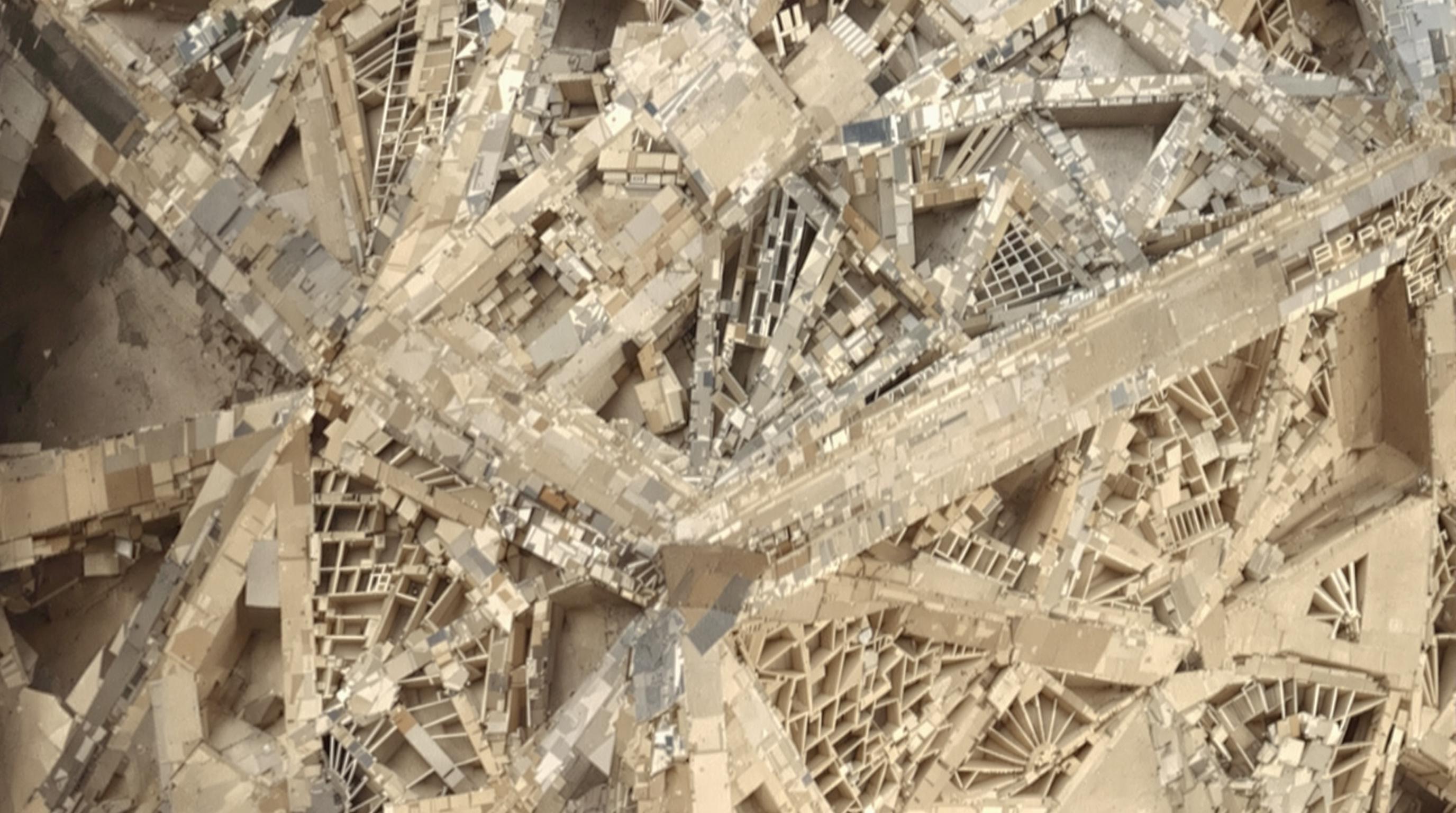
The Hidden Geometry: How Ancient Architectures Reveal Lost Mathematical Knowledge
The Hidden Geometry: How Ancient Architectures Reveal Lost Mathematical Knowledge
Ancient architectures across the globe are not merely structure; they embody complex mathematics that speaks of lost knowledge from times long past. This article delves into fascinating examples, mathematical principles in ancient design, and the intriguing question of what these geometries reveal about the civilizations that constructed them.
The Mathematical Marvels of the Pyramids
Let’s start with a classic example: the Great Pyramid of Giza in Egypt. Did you know that the pyramid is not just a tomb but an arithmetic marvel? Its builders displayed a profound understanding of mathematics.
The base of the pyramid is square, and the ratio of the pyramid's height to the length of its sides forms the angular relationship of pi. This geometric precision suggests that the ancient Egyptians employed advanced mathematical ideas, possibly through practical applications of geometry and ratios. Some researchers even argue that the artifacts indicate an early form of calculus
.Unpacking the Numbers
To put things into perspective, it is estimated that around 2.3 million stone blocks were used in the construction of the Great Pyramid, with individual blocks weighing between 2.5 and 15 tons. This is not just about moving heavy rocks; it’s about aligning them perfectly within a geometric framework. A study by mathematician Richard T. Greaves suggests that their use of the ratio known as the "golden ratio" (approximately 1.618) mirrored natural patterns, as found in various elements of nature.
The Sacred Geometry of the Temple of Solomon
Now, let’s shift our focus to Jerusalem’s Temple of Solomon, thought to have been built around 950 BCE. The design of the temple is laden with symbolism and geometric significance. Some argue that the dimensions of the temple were based on a series of numbers derived from Fibonacci's sequence, showcasing an inherent connection to natural patterns.
Where did this knowledge come from? The ancient Israelites were known to be influenced by their interactions with neighboring cultures - notably the Egyptians and Mesopotamians. This interaction likely led to an exchange of mathematical wisdom. Just imagine a group of builders, possibly buzzing about lost formulas, excited to use their ancient slide rules cut from stone!
From the Wonders of the World to Modern Inspiration
The Parthenon in Greece, another architectural marvel, employs visual systems of geometry that seem to defy the laws of nature. This ancient structure incorporates a slight curvature in its columns, known as entasis, which provides an optical illusion of perfection. The Parthenon's design has been linked to the principles of harmony in mathematics.
According to archeoastronomer Gerald S. Hawkins, the builders used proto-analytical geometry to achieve this illusion while creating an awe-inspiring aesthetic that has influenced countless architects even into the 21st century. Art reflects life, and geometry reflects art!
Case Study: The Mayan Pyramids
Transitioning to the Mayan civilization, the pyramid of Chichen Itza sheds light on the intersection of astronomy and architecture. The Mayans were not just great mathematicians; they were also astronomers. During the spring and autumn equinox, the shadow cast on the pyramid's staircase creates the illusion of a serpent slithering down, a remarkable demonstration of the unity between their architectural prowess and celestial transitions.
Statistics show the Mayans constructed at least 100 major pyramidal sites, each imbued with a complex understanding of the universe. Their ancient knowledge of geometry was likely passed down through generations, revealing a sophisticated grasp of mathematical concepts, despite having no formal algebraic notation.
A Humorous Look at Ancient Architectural Misadventures
But let’s not take ourselves too seriously! Ever wonder if ancient architects had days where they simply got it all wrong? One can only imagine a hapless stonecutter, saying, “Listen, I think the hypotenuse goes where?” As much as we romanticize these marvels, remember that even the greatest minds had their off days, just like today’s engineers might misplace a decimal or forget a crucial calculation!
Rediscovering Lost Knowledge
Many believe that the advanced mathematical principles hidden within ancient structures could shift our understanding of historical progress. According to historian John D. Barrow, mathematics is the language through which we interpret the physical universe, and early civilizations encoded this language within their structures. If only we had transcripts of their architectural meetings!
From Mathematics to Philosophy
Philosopher Pythagoras famously stated, “All is number.” This maxim ripples through history as we discover how ancient mathematicians conceptualized the universe through shapes, numbers, and even music. The harmonic intervals in music echo mathematical ratios, suggesting a deeper mathematical ethos. It is a beautiful tapestry woven from numbers, philosophy, and architecture.
Lessons from the Past
Despite the richness of this ancient mathematical knowledge, much remains underexplored. To uncover the full story hidden behind these ancient structures, we need a collaborative approach involving historians, architects, mathematicians, and even artists. Together, we could unearth not just the buildings themselves, but the intricate web of knowledge that built them.
A Contemporary Perspective
So, why should today's architects and designers bother with ancient geometry? The resurgence of interest in sustainability and biomimicry in architecture invites us to reconnect with these historical principles. Biophilic design leverages nature’s own mathematical framework to create harmonized spaces that resonate positively with human emotion.
Conclusion: The Mathematical Legacy
In summary, the intertwining of mathematics with ancient architecture offers a pathway to reflect on our historical legacy. The hidden geometry within these timeless structures reveals not just architectural brilliance, but a rich heritage of knowledge that we can still learn from today. Whether you’re an aspiring architect, an avid historian, or simply a curious soul, the math behind these monuments adds a deeper layer of understanding to our collective past - and perhaps a guidepost for our future.
As we wander through the ruins of ancient civilizations and gaze up at their extraordinary edifices, let us remember to appreciate the mathematical language that spans millennia, connecting us to the ingenuity of our forebears and illuminating the path ahead.
Read More