Related Articles
- Navigating Ethical Travel: The Role of Arts and Crafts in Supporting Local Economies and Cultures
- Rediscovering Ancestral Routes: How Ancient Trails Offer Insights into Sustainable Travel Practices
- The Ethical Dilemma of Luxury Travel: Splurging or Supporting Sustainable Development?
- Navigating Ethical Dilemmas: The Quest for Authenticity in Local Food Experiences While Traveling
- Beyond the Facade: Exploring the Subsurface Infrastructure of Iconic Historical Structures
- Curiosities Unearthed: The Surprising Connections Between Historic Sites and Modern Art Movements
9 Unusual Architectural Styles Found in Historic Landmarks That Challenge Traditional Design Narratives
9 Unusual Architectural Styles Found in Historic Landmarks That Challenge Traditional Design Narratives
9 Unusual Architectural Styles Found in Historic Landmarks That Challenge Traditional Design Narratives
1. Blobitecture
Blobitecture is a cutting-edge architectural style characterized by organic, curvilinear forms that resemble blobs or amorphous shapes. This style pushes the boundaries of traditional design by emphasizing fluid forms rather than rigid lines. One notable example is the Guggenheim Museum in Bilbao, Spain, designed by Frank Gehry, which showcases both the capabilities of modern materials and the innovative thinking behind contemporary architecture.
Blobitecture represents a significant departure from classical forms, creating buildings that are visually striking and often defy conventional expectations about architecture. With an emphasis on free-flowing shapes, the style invites architects to rethink the very essence of structure and space. The Haydar Aliyev Center in Baku, Azerbaijan, by Zaha Hadid, is another prominent example, flaunting an uninterrupted skin that bridges the interior and exterior.
These unconventional designs challenge viewers to appreciate architecture as an evolving art form that reflects the dynamic nature of human creativity. As technological advancements continue to enable such imaginative designs, blobitecture's influence on the landscape of architecture is likely to grow, inviting further explorations into the realm of fluidity and organic aesthetics.
2. Deconstructivism
Deconstructivism is an architectural style that challenges the traditional conventions of symmetry and order. Rather than adhering to established norms of construction, deconstructive designs often appear fragmented, irregular, and intensely expressive. Buildings such as the Disney Concert Hall in Los Angeles, designed by Frank Gehry, excite the senses with unexpected angles and structures that seem to break away from conventional building forms.
This architectural approach often evokes feelings of dislocation and tension, prompting viewers to engage with the structures more critically and thoughtfully. The Vitra Fire Station in Germany, designed by Zaha Hadid, exemplifies this ethos with dynamic lines that suggest movement and chaos, pushing the limits of how a building is perceived in urban environments.
By defying traditional architectural principles, deconstructivism invites a reevaluation of the relationship between buildings and their surroundings, as well as the social and ideological implications of design. The style continues to influence contemporary architecture, leaving a mark on the cityscapes of the future.
3. Brutalism
Brutalism emerged in the mid-20th century as a reaction against the sleekness of modernism, reverting to raw, unapologetic materials such as concrete and steel. Characterized by bold geometric forms and a stark aesthetic, buildings like the Boston City Hall exemplify this style's defining elements. Although often misunderstood and criticized for their harsh appearance, brutalist structures convey an honesty about materials and functions.
The movement's principles extend beyond simple aesthetics, reflecting a commitment to social purposes, often seen in public buildings and housing projects. For example, the Unité d'Habitation in Marseille, designed by Le Corbusier, sought to provide communal living spaces that prioritized functionality and community engagement.
Despite mixed receptions, brutalism challenges traditional narratives by emphasizing the expressive potentials of utilitarian design. The resurgence of interest in brutalist architecture today speaks to its enduring relevance and the recognition of its importance within the historical evolution of architectural styles.
4. Neo-Gothic Revival
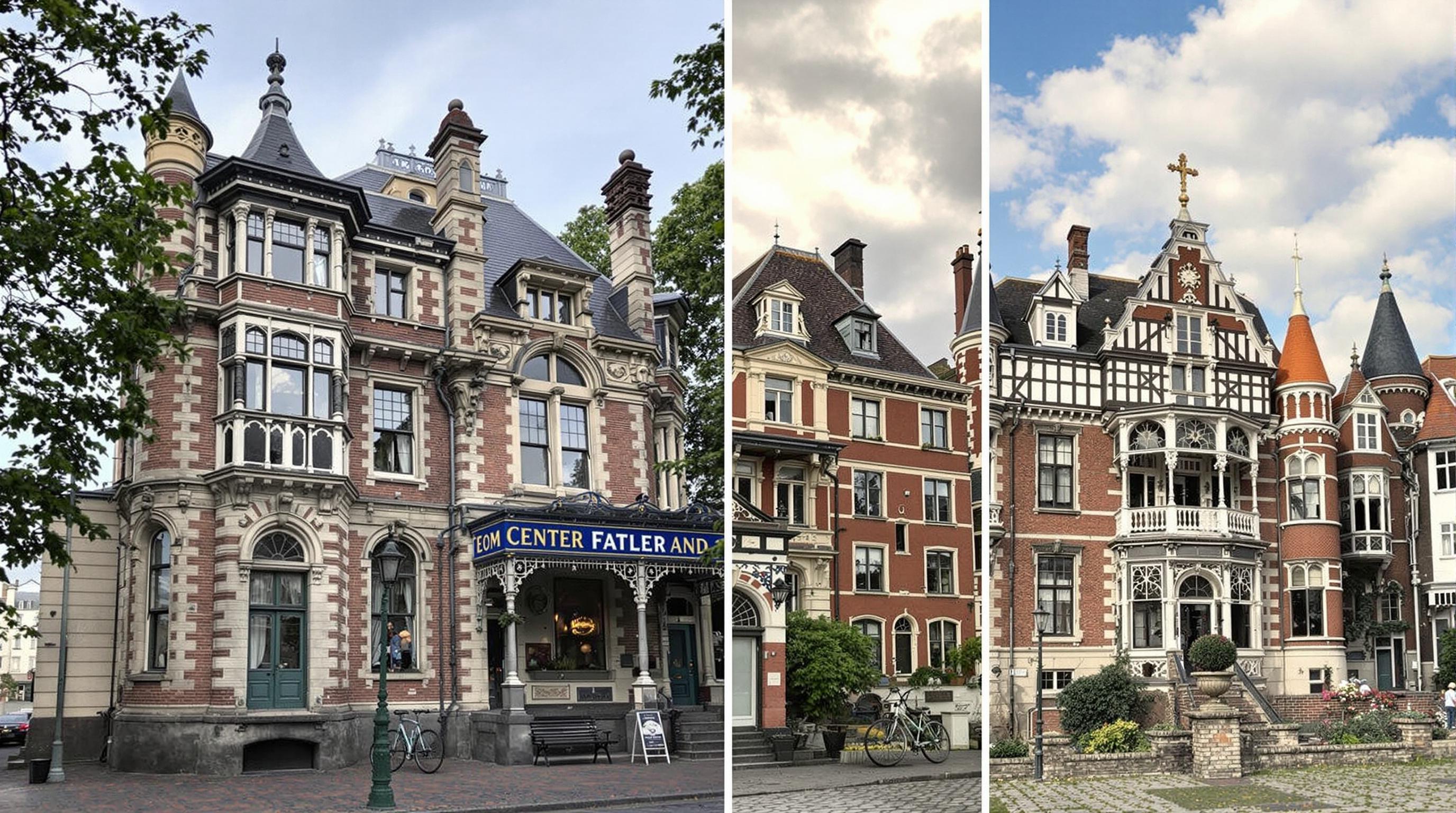
Neo-Gothic Revival emerged in the 19th century as architects began looking back to the medieval Gothic era for inspiration. Characterized by pointed arches, elaborate facades, and a sense of verticality, this style aims to evoke emotional responses while providing monumental and grand expressions of faith. A prominent example is the Palace of Westminster in London, which features iconic pointed arches and intricate stonework.
Interestingly, neo-Gothic architecture embraces an eclectic blend of old and new, often incorporating modern materials with traditional design principles. The cathedral-like St. Patrick’s Cathedral in New York is a testament to this hybridization, contrasting the historic aesthetic with the modern urban environment surrounding it.
This revival challenges modern architectural narratives by demonstrating how historical influences can be reinterpreted in innovative ways. As architects and designers continue to reinvigorate this style, neo-Gothic remains a powerful testament to the lasting impact of the past on contemporary architecture.
5. Futurism
Futurism originated in early 20th-century Italy, emphasizing speed, technology, and a break away from tradition. This style reflects the industrial age's dynamic changes and celebrates movement, energy, and modernity. The iconic Casa del Futuro in Italy embodies these principles—featuring angular forms and vibrant colors that evoke a sense of forward motion.
This architectural style challenges traditional notions of beauty and stability, favoring instead radical shapes and materials that suggest transformation and fluidity. Additionally, buildings like the Milan Central Station showcase how Futurism's enthusiasm for progress has inspired soaring designs that reinvent public spaces.
As society continues to advance technologically and socially, the principles of Futurism resonate, reminding us of architecture's role in shaping perceptions of the future. As we venture into an increasingly urbanized world, we may see a resurgence in these ideals as architects seek to create environments that reflect contemporary realities and aspirations.
6. International Style
The International Style represents a paradigm shift in architecture, characterized by minimalism and a focus on industrial materials. Emerging in the 1920s and 30s, it emphasizes functionality over ornamentation. Landmark buildings, such as the Villa Savoye by Le Corbusier, epitomize this style with their clean lines, open floor plans, and extensive use of glass.
This architectural style intersects with modernist ideals, creating spaces that are both aesthetically pleasing and pragmatically designed. Furthermore, the Farnsworth House by Mies van der Rohe exemplifies the International Style's commitment to harmony with nature, as its transparent structure allows for uninterrupted views of the surrounding landscape.
The International Style challenges conventional architectural narratives by advocating for pure functionality and expression through simplicity. By prioritizing design principles that transcend geographical and cultural boundaries, this movement has become a foundational aspect of modern architecture.
7. Postmodernism
Postmodernism emerged as a reaction to the austerity of modernism and the rigidity of earlier architectural styles. This eclectic approach values diversity, whimsy, and historical references, often merging different styles in unexpected ways. The Portland Building, designed by Michael Graves, is a seminal example with its playful color palette and ornamentation that nods to historical architecture.
By breaking traditional design rules, postmodern architecture invites a new dialogue about aesthetics and meaning. The AT&T Building (now the Sony Building) in New York City showcases this playful juxtaposition, featuring a recognizable Chippendale-style top that challenges the glass-and-steel orthodoxy of its peers.
This style encourages architects and designers to convey personal narratives through their work, often embracing irony and humor, prompting reflections on society, culture, and identity. Postmodernism reshapes our understanding of cultural relevance in architecture, encouraging creative expression that reflects the complexity of the contemporary world.
8. Microarchitecture
Microarchitecture challenges traditional scale and function norms by emphasizing flexibility and compact living solutions. Emerging in response to urbanization and environmental concerns, this style is characterized by small, often portable structures that address the need for sustainable living spaces. Notable examples include the MIT Media Lab’s "Micro-Housing" unit, designed to maximize utility in minimal spaces.
This architectural movement promotes innovation, turning the constraints of small living into creative opportunities for design. By reimagining spatial efficiency as a feature rather than a limitation, microarchitecture encourages a reevaluation of how we interact with our living environments.
Microarchitecture’s emphasis on multifunctionality and adaptability presents opportunities for architects and urban planners to redefine the boundaries of conventional structures. As urban centers continue to grow, the adaptability seen in microarchitecture offers potential solutions for contemporary living while challenging expectations surrounding habitat size and design.
9. Earth Architecture
Earth architecture embraces local materials and sustainable practices rooted in traditional construction techniques. This style often incorporates natural elements like mud, straw, and stone, resulting in structures that harmonize with their environment. Notable examples include the adobe homes of Taos, New Mexico, which demonstrate the profound connection between architecture and the natural world.
By prioritizing environmental sustainability, earth architecture challenges the norm of manufactured materials and seeks to create a more resilient approach to living. This style emphasizes the cultural significance of materials, promoting a greater sense of place and belonging among communities.
Earth architecture's revival in contemporary design practices reflects a growing awareness of ecological responsibility. As the climate crisis deepens, this architectural style encourages a reconceptualization of our built environments, emphasizing the importance of integrating traditional knowledge with modern design sensibilities.
Read More