Related Articles
- Navigating Ethical Travel: The Role of Arts and Crafts in Supporting Local Economies and Cultures
- Rediscovering Ancestral Routes: How Ancient Trails Offer Insights into Sustainable Travel Practices
- The Ethical Dilemma of Luxury Travel: Splurging or Supporting Sustainable Development?
- Navigating Ethical Dilemmas: The Quest for Authenticity in Local Food Experiences While Traveling
- Beyond the Facade: Exploring the Subsurface Infrastructure of Iconic Historical Structures
- Curiosities Unearthed: The Surprising Connections Between Historic Sites and Modern Art Movements
Uncharted Expressions: The Surprising Legacy of Migrations on Modern Art Movements and Global Aesthetics
Uncharted Expressions: The Surprising Legacy of Migrations on Modern Art Movements and Global Aesthetics
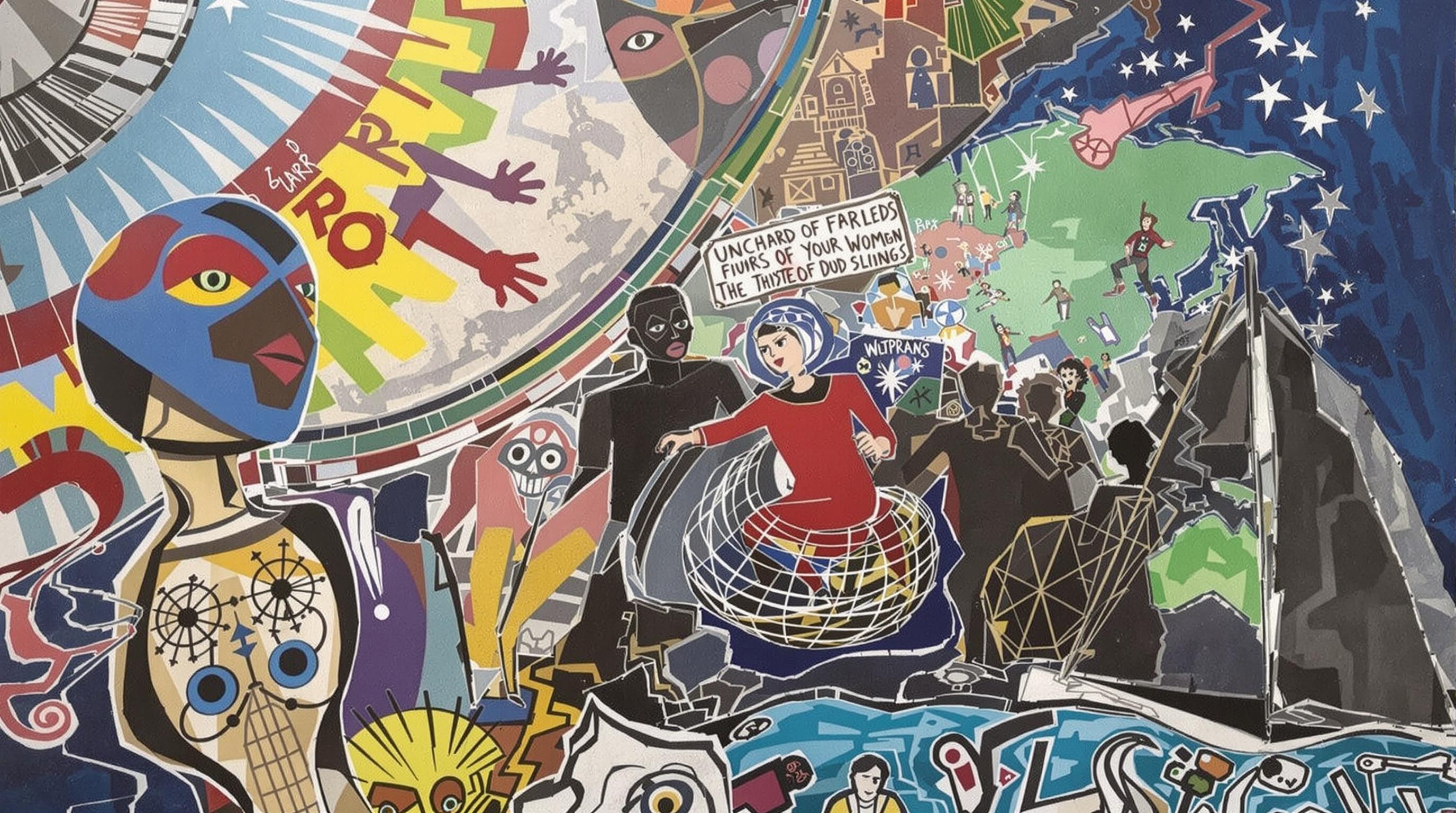
The complex tapestry of modern art movements is heavily influenced by migrations and the intermingling of cultures, leading to a rich global aesthetic landscape. This article unpacks the dynamics of this influence, demonstrating how movement and exchange have fostered innovation and diversity in artistic expression.
Understanding Migration's Impact
To understand the legacy of migrations on modern art, one must first dive into the nature of migration itself. According to the UN, an estimated 281 million people, or 3.6% of the world's population, live outside their country of birth as of 2020 (UN DESA, 2021). Such movement is not merely geographic; it engenders cultural shifts that breathe life into art.
The Fusion of Styles: A Historical Overview
Let's begin with an example straight from the canvas of history: the Harlem Renaissance. Emerging in the early 20th century, this cultural movement was a direct result of the Great Migration, in which African Americans moved from the rural South to urban centers in the North. Artists like Jacob Lawrence and Aaron Douglas breathed new life into both traditional African art forms and modernist styles, creating works that resonated with their unique cultural narratives.
In the words of Lawrence himself, "The past is not dead; it is part of the living present." His painted narratives transported audiences to a world that embodied both struggle and hope, emphasizing how migrations can carve new paths for creativity.
Style Synthesis: The Cross-Pollination Effect
But the Harlem Renaissance was just the beginning. Art movements worldwide, from Dadaism to Surrealism, have drawn from diverse cultural influences, culminating in styles that are often hybrids of various traditions. For instance, the Mexican muralists like Diego Rivera were influenced not just by indigenous arts, but by European avant-garde trends, activating a dialogue between cultures.
This cross-pollination has democratized art, allowing for trajectories that are not just dictated by Western traditions. One can argue that modern art is the product of a melting pot, with each shift in demographics providing an opportunity for novel artistic expression.
Aesthetic Globalization: The World is One Canvas
In a world increasingly defined by globalization, where the barriers between cultures are thinning, the notion of a singular “global aesthetic” has emerged. Street art, for instance, serves as a fascinating lens through which to view this phenomenon. From the graffiti-tagged streets of São Paulo to the murals of Berlin, street art is a universal language rooted in local contexts yet resonating globally.
Take Banksy, for example, the enigmatic British artist whose works inspire conversations around social justice and political unrest. His pieces often evoke reactions that transcend cultural boundaries, compelling viewers from various backgrounds to engage with pressing global issues. Street art exemplifies how migration introduces new ideas to the mainstream, pushing traditional boundaries of creativity.
Curating Cultural Narratives
Consider how art institutions have evolved to reflect these multicultural narratives. Museums have begun to diversify their collections to tell a more accurate story of art history—one that includes voices from Africa, Asia, and Latin America, in addition to those from the West. The movement towards inclusivity creates a dialogue that influences even the most traditional institutions.
In fact, following the 2020 Black Lives Matter movement, many museums reevaluated their displays and narratives, aiming to decolonize their collections. The Tate Modern in London, for example, has made strides to include artists from formerly overlooked backgrounds, thereby enriching the contemporary art conversation.
The Role of Technology
Technology, particularly social media, serves as an accelerator for these discussions. Platforms like Instagram allow artists from all corners of the globe to showcase their work without the filter of traditional gallery spaces. This democratization of exposure adds another layer to the complex interplay between migration and modern art, as diverse voices engage with audiences worldwide.
Migration as a Catalyst for Innovation
Take, for instance, the work of Ai Weiwei, a Chinese dissident and artist. Weiwei’s migration experience informs his work, which critiques the status quo and engages with broader human rights issues. He famously said, “My art is not an isolated act, but part of a larger dialogue.” Artists like him illustrate how migration can inspire groundbreaking ideas, advocating for change and social justice through their art.
According to a report by the World Economic Forum, immigrants are 50% more likely to be entrepreneurs than native-born citizens (WEF, 2021). This entrepreneurial spirit is often reflected in contemporary art. Immigrant artists challenge traditional forms and explore new media, taking inspiration from personal narratives and diverse cultural contexts.
Case Studies: Artists Giving Voice to Experience
Another compelling case is that of Shirin Neshat, an Iranian-born artist who moved to the U.S. after the Islamic Revolution. Her work often reflects her own experiences of exile and identity, employing film and photography to narrate the complexities faced by women in Islamic society. Neshat’s art resonates powerfully with audiences, merging personal narratives with broader socio-political commentary.
From the neo-Expressionism of Jean-Michel Basquiat to the conceptual art of Yoko Ono, the continued intertwining of cultures produces a thriving ecosystem of ideas. Basquiat’s work, for instance, draws heavily from his Haitian heritage and the experience of a Black artist in America, creating commentary that feels both specific and universal.
The Path Ahead: Embracing and Reflecting Diversity
Looking forward, it is clear that response to migration and displacement will play a pivotal role in shaping future artistic frameworks. As people continue to traverse borders for reasons spanning from employment to escaping conflict, the arts will undoubtedly evolve in tandem. Activism, identity, and storytelling through art will take center stage, reflecting the urgent issues of our times.
Moreover, the rise of the digital age affords a unique opportunity for artists to bypass conventional art networks. The ability to connect with an audience without traditional gallery representation encourages experimentation and collective art-making, blending aesthetics and ideologies from around the globe.
The Humor in the Unconventional
And let’s not forget the element of humor! Art can be a serious business, but it is also a space for playful criticism. Consider the viral work of artist Nando Costa, who combines vibrant colors and witty commentary about today’s global issues. His ability to infuse humor into serious topics exemplifies how creativity can simplify complexities and make art accessible to everyone.
As the saying goes, “Laughter is the shortest distance between two people.” Humor serves to bridge the gap between cultures, enabling individuals to engage with their differences while celebrating shared human experiences.
Summing Up: The Endless Tapestry
In conclusion, the legacy of migrations on modern art movements and global aesthetics reveals a vibrant mosaic of human experience, characterized by collaboration, innovation, and resistance. The stories told through art reflect both individual truths and collective history, fostering understanding across cultural divides.
As the world becomes increasingly interconnected, artists have the unique opportunity—and responsibility—to convey the nuances of our shared humanity. Whether serious, humorous, or somewhere in between, the expression of our diverse experiences through art remains uncharted, waiting to evolve and inspire future generations.
In essence, art changes the world, and as long as people move and exchange ideas, that change will continue to unfurl its colorful, unpredictable wings.
Read More